

Well, after our wonderfully warm two weeks, it’s like autumn has struck! Just as well the aircon man hasn’t been.
There’s not a lot of news at this end, so I’ll get into updates.
Updates
Heart of Deception
I have finished tweaking it and it’s currently sitting on my kindle waiting for me to go through it with a notebook and pen adjacent. I am planning to work on this at some point today.
Gifted Universe
There should be a few books coming out in that universe – once I get some of my other books republished. I have been editing the first that is not part of the Otherworldly Emergence series, but is chronologically between the two of them.
Grow Write
Yes, our writing group is still going. We are currently working on our 2027 anthology and hope to have that out later next year. We had a great time writing our last one in 2025 and I know I’ve had fun gathering stories for next year’s.
We’ll also have a celebration next year – I’m fairly certain it’s out 10th anniversary – I’ll have to check with the library – it may be this year.
Bushland Castle Productions
Otherworldly series
Bushland Castle Productions are currently in the second series of a group of five series related to Otherworldly topics. So far, the Emergence series has been published and the Origins series is currently being written and edited.
These are all separate novellas with an interweaving element. Emergence had a reaper.
PS. My story is currently with beta readers! Can’t wait to get it back!
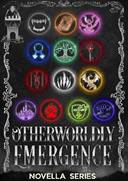
Otherworldly Emergence
Yes, they’re completely out there! All 12 ebooks and paperbacks are available online and the best place to buy them is at www.bushlandcastleproductions.com/book-shop. Every book is listed there.
Otherworldly Origins Series
This series builds on the Otherworldly Emergence series. Some of the stories relate to the ones in the Emergence series, but some don’t.
This series is about the first of a kind. Like, the first of a creature, the first of a power, the first of a magical element. Something that has never been seen before.
The Otherworldly series are not the only publications Bushland Castle is working on. They also have a memoir series they are currently working on. The first series of that is titled “Living in Australia in the 70s”. This is for those of us who were late teens between 1970 and 1980.
They also produce Low Content journals aimed at aiding writers in whatever style in which they write.
Bushland Castle Productions also provide an author support platform. This includes workshops, twice weekly catchups online, write-in sessions on Discord and a whole heap more assistance.
So, visit www.bushlandcastleproductions.com for further information on their products and their street team – known as the Town Criers. If you’re interested in being an ARC reader for any of the series, Town Criers are always needed.
Finally, the last thing Bushland Castle Productions have is the Finding Elara podcast. This podcast features special guests who discuss their goals and achievements and answer questions about their creative works and how they came to do what they love.
Seasons 1 – 3 are available and season 4 is in the planning stage. So, stay tuned.
Editing
I know I’ve covered this before, but sometimes it pays to revisit topics.
I have always understood that I don’t know all there is about writing. I find commas are a huge confusion, although since doing an editing unit at Curtin University, I understand them a hell of a lot better than I used to. (And, no, they’re not for taking a breath. You can do that whenever you want to when reading.)
I am what used to be called a pantser. It meant “writing by the seat of your pants”. I used to think I was a “plantser”, which was a cross between a pantser and someone who plans everything. That’s because sometimes I put a plan together on the second draft – just so I know the story’s following some major plot line.
It’s now known as a “discovery” writer, which I suppose is more accurate, but I prefer the term pantser. But that’s me. So, being a pantser, we write how we think. We literally turn our words from our head onto the screen or paper.
But that’s not all I do. When I write, I see a movie. I hear it and I spell it and, sometimes, I feel it. Now, you might ask what that has to do with editing.
Well, you see, to edit properly, you have to see the words on the second read-through. Not the story, not the setting – or the characters. The words. WORDs, themselves.
And that’s hard for someone like me. Which means I hate editing. Because on the first few tries, I always end up getting sucked back into that story. That movie. With all the smells, feelings and sights. And then come the arguments with the characters.
Anyway, I’m not talking about those.
I don’t go through too many edits to start off with because I am too close to the story. I have to wait at least a day (yeah, I get impatient) before I even open it up and start “draft 1”. (Because raw writing is commonly draft 0.) And I hold with something I read when I first went on the journey to be a fulltime writer – the first draft, the raw writing, draft 0, is your characters telling you their story. Every other draft is you refining that story to make sure others can understand it fully.
I know there are a lot out there who don’t get an editor. Who think their work is perfect from the moment they write their first word. And good luck to you if it is.
But it is a rude awakening when you go back to that same book 5 years later and suddenly it’s not as good as you thought it was. I’ve been there, I’ve done that. Which is why I’ve got 1 book that’s going through tweaking and its sequel has yet to be republished. Because I want them to be right.
I grew up in a family of readers. And we read it all – well, I was the only one who went sci fi. We read Alistair McLean, we read Mills & Boon, we read Clive Custler, we read Tom Clancy. I read Isaac Asimov, Andre Norton, Anne McCaffrey, James P Hogan and Harry Harrison along with a whole heap of others – including Frank Herbert. Yes, I’ve read the Dune series. In its originality. I’ve read the I, Robot books. And I’ve read the Foundation series.
The reason I’m mentioning this is because it gave me a grounding for what was good writing and what wasn’t. It taught me how to write most sentences and how to pace stories. It taught me what characters should be and how plots should evolve.
I know there’s something called the 3-act book out there. I know lots of writers who adhere to that and hats off to them. I’ve never used it and never even looked at it until this year when I pulled apart one of my stories and found I’d done it unconsciously. Because it came out of all those disparate books I read growing up. Not from some training or video.
It’s all about the reading. Reading lots of books from different genres and authors, in my view, may give you a better grounding for writing your own stories.
Now, I’m not saying don’t be a planner, be a pantser. No, of course not. Look at JRR Tolkien. He spent years building Middle Earth. So did Isaac Asmiov. And Anne McCaffrey.
I’m not saying which style of writing would be best for people. No way. Everyone is an individual and thus their writing styles or “voices” are unique. And, yes, we do need more of them.
I firmly believe that all that reading paved the way for me bringing my own stories to others.
Now, I have to say here, that I am firmly against generative AI with regard to creating documents, music and art. That’s partly because I can see it creating a huge unemployable workforce in the very near future. The other part is because we, as creators, have spent a lot of time, effort and money into creating our works and what we currently call AI cannot emulate that.
And let’s face it – it’s algorithms. Not true sentience.
And AI is robbing people of the skills to research things. To find out their own answers. And to grow. I don’t use any writing aids in my editing. I use resources such as The Emotion Thesaurus and The Fear Resources as well as Macquarie Dictionary and the Australian Government Style Manual. Because those are not AI and I learn every time I edit my work and have my work edited. I study the changes my editor has made (and her comments, like “stop hurting him or I’ll take him from you”) and reflect on what they mean. And sometimes it’s a stupid error on my part and I own it.
So, next time you write something, don’t publish it straightaway. Leave it for a while. Let it percolate. Then go back over it. One of my final methods is to put whatever I’m editing on my kindle and have a notebook nearby. I find a lot more errors that way. So, perhaps do that. And go and read some of the masters. (Yes, I have read H G Wells and Jules Vern.)
Then, when you return to it, if you’re still happy it reads well and that your readers will appreciate it, then feel free to upload it. Or hire an editor to help you refine that story to the best it can be.

